

I came to Idaho to stay.But not to sit by.
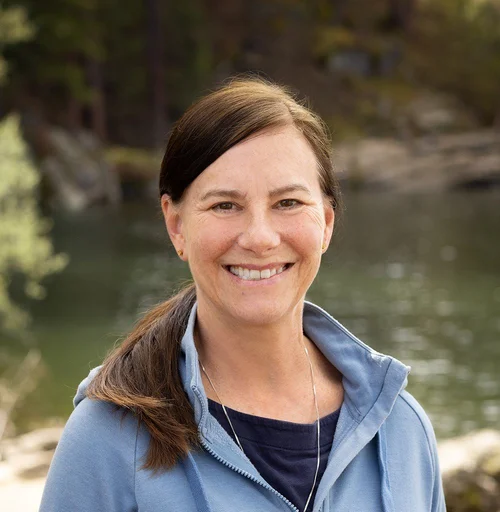
I've lived in a lot of places. When I was 7 years old, my family moved from California to Arizona and then to Texas, where I spent most of my childhood years. Looking for a college, I chose the Air Force Academy in Colorado. My Air Force career took me across the country and around the world — 19 moves in 31 years — settling me in Japan, Germany, and Qatar, and nine more states. But I have always considered myself to be from the West, and when I reached northern Idaho, I knew I had found my place.
I bought land in Bayview, on Lake Pend Oreille, in 2013, while I was still on active duty. Two of my sisters were already in Washington nearby. The land, the water, the mountains, and the people... it all felt right. In 2018 I retired from the Air Force, and in 2020 I took possession of the house I had built there. I am not passing through. I am home.
What thirty-one years teaches you about systems... and what happens when they fail.
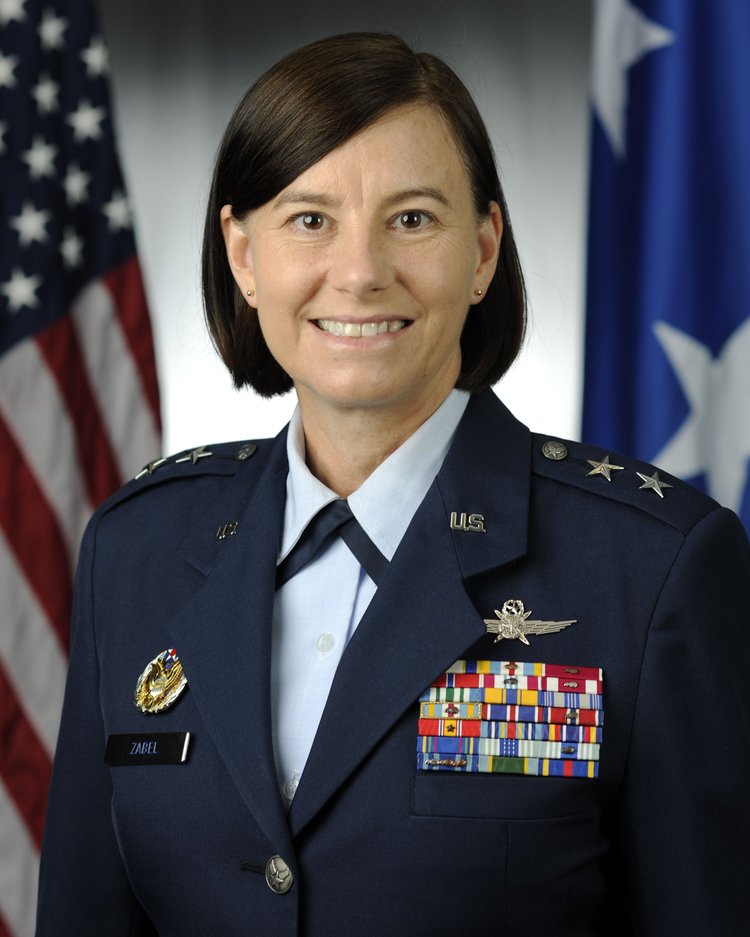
I graduated from the Air Force Academy in 1987 with a degree in computer science, and spent the next 31 years inside some of the most complex systems in the world: the networks that carry the President's communications, the global infrastructure that connects every combatant command, the cyberspace operations that protect all of it from people who want to take it down.
I commanded at squadron, group, and wing levels and served on the Air Force and Department of Defense staffs, where I developed policy and oversaw multi-billion dollar budgets. My career culminated as Vice Director of the Defense Information Systems Agency, leading 16,000 military and civilian personnel who plan, build, and operate the joint command and control systems that support the President, the Secretary of Defense, and every combatant commander in the world. The scale of that responsibility is difficult to describe, but it taught me some fundamental truths.
Complex systems do not maintain themselves. They require constant attention, investment, and honest assessment of where they are failing. When you defer that maintenance — when you tell yourself the system is fine because it hasn't failed yet — you are not saving resources; you are borrowing against a future crisis. I have watched that happen in technology systems, in organizations, and in the networks that underpin national security. The process is gradual but the consequences aren't. They are sudden, and they are drastic.
That is an engineering observation, but it applies to complex systems throughout our world: health, natural resources, law, and our communities. And it is the perspective that I am bringing to Congress.
In 2003 and 2004 I served in Qatar, at the height of operations in Iraq and Afghanistan, as Chief of Command, Control, Communications and Computer Systems Operations, Plans and Engineering for Central Command Air Forces-Forward. I earned the Bronze Star there. I know what it costs when government fails to make good decisions, and I know the people who pay that cost.
I also have three master's degrees: in computer science, military operational art and science, and strategic studies, and the educational record of someone who kept trying to understand things more deeply throughout a career that could have coasted on execution alone. I was a distinguished graduate at the Air Force Academy, Squadron Officers School, and Air Command and Staff College. I earned the Commandant's Award for Distinction in Research at the Army War College. I taught computer science at the Air Force Academy.
I tell you all of this not to recite a resume. The question you should ask of anyone seeking your vote is not what they have done; it is how they think. Do they go deep on hard problems, or do they reach for the nearest available answer? When I don't understand something, I find the people who know it best, I do the research, and I try to produce something useful. My record — my career, my degrees, my book, and my research — is evidence of that.
The research, the book, and what they show about how I work.
When I retired, a close friend was in the midst of a decade-long struggle with depression and suicidality. I didn't have the language or the knowledge to understand what she was going through or what might help, but I couldn't leave it at mere sympathy. So I did what I do with hard problems: I researched the subject intensively, and found the people who knew the most about it to ask them to explain it to me.
Three years of research and interviews later, I published Fighting Chance: How Unexpected Observations and Unintended Outcomes Shape the Science and Treatment of Depression. It won an Indie Reader Discovery Award and a Silver Medal at the Independent Publisher Book Awards, both in psychology and mental health. The Midwest Book Review called it “a truly seminal study that is exceptionally well written, organized and presented.” A researcher at UC Irvine’s School of Medicine called it an essential resource for anyone who encounters people at risk. A second edition followed in 2025.
I also became the caregiver for my father, who was then in his nineties, and filled that role through the COVID pandemic. After he moved into assisted living and then passed away, I joined RAND Corporation as an Adjunct. RAND is one of the country’s most respected nonpartisan policy research institutions. It does not advocate, it analyzes. Working there drew on the full range of expertise I had developed throughout my career and reinforced something I already believed: that good policy is built on honest evidence, not on the conclusions you decided to reach before you started.
I left RAND at the end of 2025 to run for Congress. The problems I had been researching and writing about: the dysfunction, the deferred maintenance, the gap between what we know how to do and what our elected officials are actually doing, had become too urgent to observe from the outside.
I was a Republican throughout my military career. I did not leave the party because my views changed; I left because the party did. I believe that markets are the most powerful engine of prosperity ever devised, that they require maintenance to function, that government's job is to provide that maintenance and then stop. This is what Eisenhower called Modern Republicanism, and it is what the Party was before it confused tax cuts with investment. And now that tradition no longer has a home.
I am not running as an Independent because I am somewhere in the middle between two parties. I am running because I hold a clear set of convictions that neither party currently represents, and because thirty-one years of building and running complex systems at the highest levels of national security left me with very little patience for institutions that mistake dysfunction for principle.
I’m not the only one. I’ve talked with Idahoans up and down the District, affirming that what we see in the national media doesn’t match who we really are, and that we are not getting what we need from our federal government.
We deserve a representative who will actually listen to us, not perform for a party. I will be that representative.
The framework, the principles, and the specific policies.
