
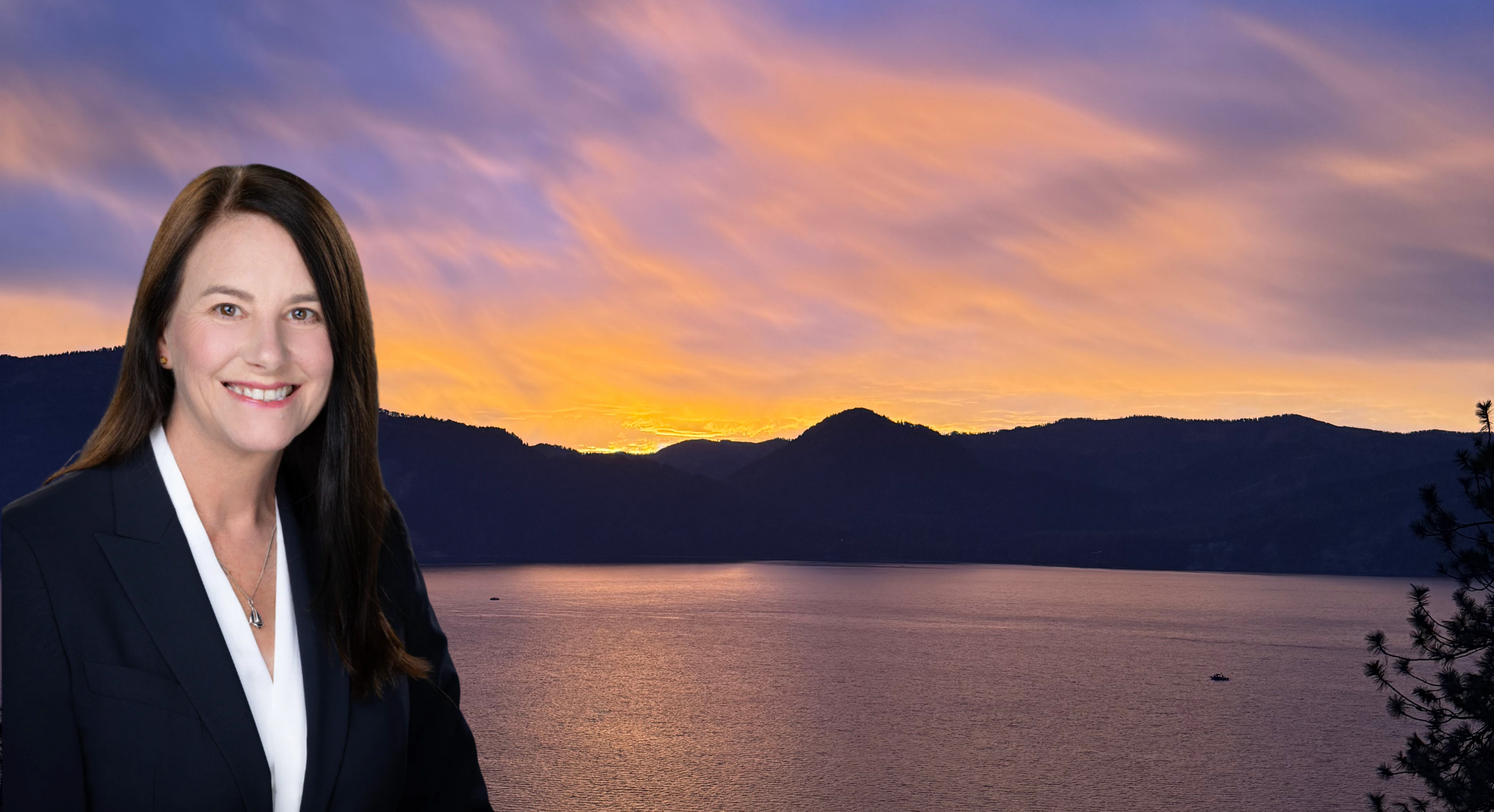
31-Year Veteran. Retired Air Force Major General. Neighbor.Still serving.
Idaho is bearing the costs of a Congress that works for party leaders, not for us. I'm running to change that.
I spent decades in the military, where politics had to stay out of the room. I was a Republican, but I never told anyone that and they never told me what they were. We just worked the mission. That's what we need now: a Congress that works for the people, not the parties.
Our problems are serious and urgent. $40 trillion in debt, weighing on borrowing costs for all Idahoans, families, and businesses. A looming cut to Social Security for almost 400,000 Idahoans. As many as 250,000 Idahoans with no health care insurance coverage by 2028—including 40,000 children. The threat of seeing our public lands on the auction block. But Congress is unwilling to get to work to fix the problems. They only want to play for the cameras.
I don't work for a party. I work for Idaho. I bring decades of public service, experience with federal budgets worth billions, and policy solutions that kept our nation secure.
You don't serve your country for 31 years just to watch it fall apart.
- Fix Social Security before the funds run out. This calls for a balanced approach: raise revenue and reduce payouts for the highest earners while extending the program to more people.
- Get the national debt under control. Last year we paid more in interest than we spent on defense, and the consequences are landing on every family. Raise revenue and reduce expenditures while we grow the economy. No one-sided approach.
- Bring down the cost of health care. Premiums keep rising and too many Idahoans are one bill away from a crisis. Attack the waste in all cost areas — including hospital services, physician services, and prescription drugs — not just insurance.
- Protect our public lands. Public lands belong to all of us; the federal government manages them.


Idaho is tired of a Congress that doesn't work. So am I.
Why are you not running as a Republican?
Why are you not running as a Democrat?
Who will you caucus with?
These questions came up everywhere as I traveled from my home in northern Idaho up and down the District, collecting signatures to get on the ballot in November. They are the right questions. Policies reflect ideology, and with any candidate, you need to know what you are getting.
I am not running as a Democrat because I don't share their worldview. Democrats put the people first and assume the economy will follow. That sounds noble, until reality sets in. The end result of this philosophy has been government programs that crowd out private initiative, regulations that too often protect incumbents rather than workers or consumers, and redistribution in place of growth.
I am not running as a Republican because the party has abandoned the tradition it once held. That tradition rightly recognized that markets are the most powerful engine of prosperity ever devised, that they require maintenance to function, and that government's job is to provide that maintenance and then stop. Eisenhower called it 'Modern Republicanism.' It built the interstate highway system, the GI Bill, and the research investments that created American technological dominance. But starting about four decades ago, the party convinced itself that tax cuts alone would provide the investment necessary to feed the economy. It doesn't. Rather than invest in the economy and the conditions that sustain it, they lean on borrowing ever greater sums against our future.
I believe that the Republican Party is right to focus on the economy as the engine that drives American prosperity, but that their current policies are working against it. I see government's role as reducing the obstacles to American inventiveness and industry so that businesses and the communities that support them can flourish. That philosophy leans toward free markets and an openness to world trade. It favors legal pathways to getting the workers we need, while preventing the uncontrolled migration that threatens security and risks overwhelming community resources. It casts aside regulation that prevent the entry of small players into the marketplace and supports regulation to keep the most powerful groups from rewriting the rules to assure their continued dominance. It preserves a safety net, so that a failed venture doesn't become a ruined life. It recognizes that there are some institutions and some investments that a free market won't support, but the absence of which are themselves obstacles. Here and now, such an investment would be completing broadband access in our rural areas; such institutions would be public schools and rural hospitals. But government also needs to know when to stop. When the tax burden of big government programs makes daily life a struggle, people won't be able to invest in education, businesses, or their future. When the government grows too intrusive, we lose the freedoms that we cherish. Government's motto should be 'just enough.'
A government that supports business success amid thriving communities should be right square in the common ground of what both parties value at their core. But common ground and bipartisan support don't get us very far in today's political reality, which brings us back to the third question: Who will you caucus with?
Today's political reality accepts the idea that the biggest questions — even those specifically assigned to Congress, like whether to take the country to war — are decided unilaterally by the President while Congress sits by. I don't accept that and neither should you. Restoring Congress to its constitutional role is itself one of the central fights I am taking to Washington. In the meantime, Congress still controls the laws that govern daily life, including matters of critical importance to Idaho, like the Public Lands in Public Hands Act. Where you sit determines the influence you have in those decisions. I will position myself to work with those who provide the assertive center, who demand to be heard on every issue, large and small, and push the country back to its constitutional norm.
Being an Independent does not mean being undecided or alone. An Independent can be a wedge that breaks apart a calcified, unproductive party structure. I am that, and more. I bring with me a unifying worldview and policies to advance it: direction, not disruption.
This Independent is not a spoiler. This Independent is a leader.